
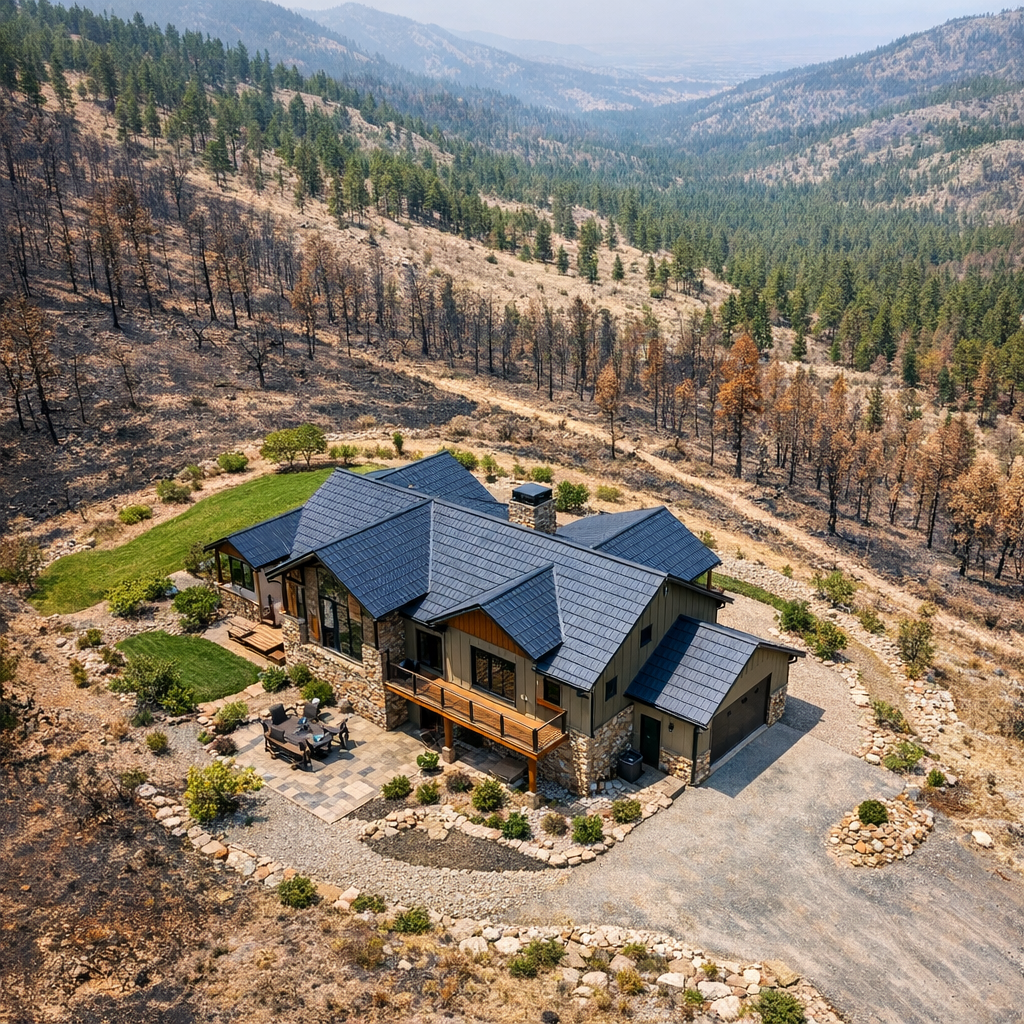
Learn how HB25-1182 requires insurers to disclose wildfire scores and accept mitigation—what your notice means and how to appeal.
Introduction
Starting July 1, 2026, Colorado homeowners will receive new transparency into how wildfire risk affects their insurance premiums and renewals. House Bill 25-1182 requires insurers who use wildfire models to disclose your property's wildfire risk score, recognize documented mitigation efforts in pricing, and provide you with a clear path to appeal unfavorable ratings or non-renewals.
This legislation shifts the conversation from opaque algorithms to actionable information—giving you the tools to understand your exposure, take steps to harden your home, and advocate for fair treatment. The law doesn't promise lower rates, but it does ensure that home-hardening investments can be seen, measured, and credited where insurers use wildfire risk in underwriting decisions.
Key Takeaways
• Effective July 1, 2026: Insurers using wildfire risk models must disclose your property's wildfire score when issuing, renewing, or non-renewing your policy.
• Score transparency: Your notice must explain how the score is calculated, what factors drive it, and what steps you can take to improve it.
• Mitigation credit: Insurers must reflect parcel-level and community mitigation in their models, or provide discounts for documented home-hardening measures.
• Right to appeal: If you believe your score is inaccurate or doesn't reflect recent mitigation work, you have a formal process to request review and correction.
• Documentation is key: Professional assessments and records of fire-resiliency upgrades are the foundation of a successful appeal—PRQ Exteriors' fire resiliency assessment provides the evidence carriers need.
What Is a Wildfire Insurance Score and Why Does It Matter?
A wildfire risk score is a numeric or categorical rating that reflects your property's vulnerability to wildfire damage. Insurers generate these scores using models that consider factors such as proximity to wildland fuels, local fire history, terrain and slope, vegetation density, access for firefighting equipment, and community-level fire protection resources. Until now, most carriers have used these scores internally without disclosing details to policyholders.
HB25-1182 changes that. Beginning in mid-2026, if your insurer relies on wildfire modeling to price or underwrite your policy, they must tell you what your score is and how it was derived. That transparency matters because it gives you insight into which risk factors are driving your premium—and which ones you can influence through property improvements.
Understanding your score is the first step toward managing wildfire exposure. Some factors, like regional weather patterns, are outside your control. Others—roof material, defensible space, vent screens, and siding—are squarely within it. PRQ Exteriors' fire resiliency assessment walks you through both, identifying upgrade opportunities that strengthen insurability and align with the criteria carriers use in their models.
What Your Wildfire Score Notice Must Tell You
Under the new law, insurers must provide a written disclosure that includes three key pieces of information. First, the notice must state your property's wildfire risk score in clear terms—whether that's a number, a tier, or a classification—along with an explanation of what the score means in the context of your policy. Second, it must describe the methodology: which data sources, model inputs, and risk factors were used to calculate the score. Third, and most importantly, the notice must outline steps you can take to improve your score, including any mitigation measures the insurer recognizes for premium credits or coverage consideration.
This disclosure applies at multiple decision points. You'll receive it when a new policy is issued, when your policy is renewed, and if your coverage is being non-renewed due to wildfire risk. The goal is to ensure you're not surprised by changes in pricing or availability and that you have time to act on the information before losing coverage.
Carriers are also required to either build parcel-level and community mitigation directly into their scoring models or offer explicit discounts for documented improvements. That means if you've installed Class A roofing, cleared defensible space, upgraded vents, or participated in a Firewise USA program, the insurer must credit those actions in some form. The law doesn't mandate a specific discount amount—that remains at the carrier's discretion—but it does require recognition of your investment in risk reduction.
What to Do When You Receive Your Wildfire Score Notice
When your disclosure arrives, read it carefully and compare the stated risk factors to your property's current condition. Look for any outdated or incorrect information—such as an old roof material, vegetation that's since been cleared, or community fire protection upgrades not reflected in the model. If something doesn't match reality, gather documentation: photos, receipts, permits, or contractor reports that show the current state of your home and lot.
Next, identify which mitigation steps the insurer recognizes. Some carriers accept a wide range of improvements—roof upgrades, ember-resistant vents, fire-rated siding, and defensible-space maintenance—while others have narrower criteria. Focus your efforts on measures that will be credited in the model and that align with current wildfire building standards. Verify local requirements with your building authority, as some jurisdictions have adopted the Colorado Wildfire Resiliency Code or similar standards that may affect eligibility for mitigation credit.
If you've already completed hardening work but it's not reflected in your score, or if you believe the score is based on faulty data, you have the right to request a review. The insurer must provide a process to appeal the score and to submit new documentation. This is where professional assessments become valuable: a detailed report from PRQ Exteriors' fire resiliency inspection can document existing mitigation, photograph key features, and provide a third-party record that supports your case for rescoring.
How Home Hardening and Documentation Support Your Appeal
An appeal isn't just about disputing a number—it's about presenting clear evidence that your property's wildfire risk has been reduced. Carriers will look for documentation that is recent, specific, and verifiable. General statements or anecdotal claims carry less weight than timestamped photos, contractor invoices, building permits, and third-party inspection reports.
Home-hardening improvements that typically strengthen an appeal include replacing combustible roofing with Class A asphalt or metal, installing ember-resistant vent screens and gable-end closures, upgrading siding to non-combustible or ignition-resistant materials, clearing vegetation within the home ignition zone (0–5 feet and 5–30 feet from the structure), and ensuring adequate access for emergency responders. Each of these measures addresses a specific ignition pathway that wildfire models evaluate.
PRQ Exteriors offers a comprehensive fire resiliency assessment designed to produce the level of detail insurers require. Our inspection covers roof condition and material classification, ventilation openings and ember entry points, siding and trim combustibility, defensible space and vegetation management, deck and attachment exposures, and access and water supply considerations. The resulting report includes annotated photos, a summary of current mitigation status, and recommendations for additional improvements—all formatted for submission to carriers. When paired with our insurance claim support services, the assessment becomes a roadmap for both immediate appeals and long-term risk management.
Understanding Colorado's New Wildfire Insurance Score and How It Affects Your Coverage
HB25-1182 represents a shift toward accountability and transparency in wildfire underwriting. For years, homeowners have faced non-renewals or steep premium increases with little explanation. The new law doesn't cap rates or guarantee coverage, but it does require insurers to show their work and give you a fair chance to respond. Your wildfire risk score becomes a shared reference point—one you can understand, question, and improve.
The practical impact will vary by carrier. Some insurers already use advanced parcel-level data and may have internal processes in place to recognize mitigation. Others rely on broader regional or ZIP-code models that don't yet capture individual property improvements. The law pushes all carriers toward more granular modeling or explicit discount structures, which should reward proactive homeowners over time.
It's important to manage expectations. Mitigation alone won't eliminate wildfire risk in high-exposure areas, and insurers retain discretion over coverage decisions. The law's strength is in process: you'll know where you stand, what factors matter, and how to engage when your score doesn't reflect your efforts. PRQ Exteriors supports that process by providing the documentation and expertise to turn a score notice into a plan of action.
How Your Roof and Exterior Materials Influence Your Wildfire Risk Rating
Your roof is the single largest surface exposed to embers and radiant heat during a wildfire. Class A roofing—including most modern asphalt composition shingles, metal panels, and tile—offers the highest level of fire resistance under current testing standards. Older or untested materials, wood shakes, and certain lightweight membranes carry higher risk and will typically result in elevated wildfire scores. Insurers evaluate not only the material itself but also its condition, age, and maintenance history.
Exterior walls, trim, and eave details matter nearly as much. Siding materials fall into three broad categories: non-combustible (fiber cement, stucco, brick, stone), ignition-resistant (treated wood, certain engineered composites), and combustible (untreated wood, vinyl in some configurations). Gaps around windows, doors, and roof-wall intersections can admit embers, so proper flashing, caulking, and ember-resistant vent screens are critical details that models may evaluate.
If your home has combustible siding or an aging roof, upgrading during your next replacement cycle can significantly improve your score. PRQ Exteriors coordinates roof and exterior material selections with fire-resiliency goals in mind. Our assessment service identifies which components are contributing to your current score and which upgrades will deliver the most value in terms of both protection and insurer recognition. We work with materials tested to ASTM E108 (roof fire rating) and ASTM E84 (flame spread) standards, ensuring that improvements meet the criteria carriers use in their models.
Impact-Resistant Roofing Systems That Lower Insurance Costs in Fire-Prone Areas
Class 4 impact-resistant shingles—rated under UL 2218 for hail resistance—are increasingly recognized by insurers for dual benefits: they reduce storm damage claims and often meet Class A fire ratings. In wildfire-prone areas of Colorado, a Class 4 / Class A roof addresses two of the most common perils homeowners face. While the law doesn't mandate specific discounts, many carriers offer premium considerations when both impact and fire ratings are documented.
Metal roofing systems also excel in fire-prone zones. Steel and aluminum panels achieve Class A fire ratings and are non-combustible, making them a preferred choice for properties in the wildland-urban interface. Metal roofs resist ember penetration, don't degrade under UV exposure as quickly as asphalt, and typically carry longer warranties—attributes that models may factor into risk scoring.
PRQ Exteriors' Impact-Resistant Upgrade Package combines Class 4 shingles with reinforced underlayment, ember-resistant ridge vents, and upgraded flashings. When specified as part of a fire-resiliency plan, the package delivers a roof system that performs under multiple hazard scenarios. We document material certifications, installation details, and manufacturer registrations so you have the records needed for insurer submissions and future appeals. The goal is a roof that not only lasts but also communicates durability and risk reduction to underwriters.
Proactive Property Upgrades That Improve Your Wildfire Score and Protect Your Home
Beyond roofing, several exterior improvements can lower your wildfire risk profile. Installing ember-resistant vent screens on all attic, crawl-space, and foundation openings prevents embers from entering concealed spaces where ignition can start undetected. Replacing wood decking or deck attachments with non-combustible materials reduces the chance of fire spreading from the ground plane to the structure. Clearing dead vegetation, pine needles, and mulch from the immediate perimeter (0–5 feet) and managing brush and tree density in the extended zone (5–30 feet) limits fuel available to flames.
Window and door upgrades also play a role. Dual-pane, tempered glass is more resistant to radiant heat than single-pane, and fire-rated entry doors with weather seals reduce ember infiltration. Gutters should be kept clear of debris, as accumulated leaves and needles can ignite from embers and spread fire to eaves and fascia.
PRQ Exteriors coordinates these improvements as part of comprehensive exterior restoration projects. When storm damage triggers a roof replacement, it's often the most cost-effective time to add fire-resiliency upgrades—siding, vents, gutters, and trim—since access, staging, and permitting are already in place. Our assessment service prioritizes upgrades by impact and carrier recognition, so you can phase work according to budget and appeal timelines. Each improvement is documented with before-and-after photos and product specs, building a portfolio of mitigation evidence that strengthens future score reviews.
Navigating Insurance Requirements When Replacing Your Roof in High-Risk Zones
If you're planning a roof replacement in a wildfire-prone area, expect your insurer to have specific material and installation requirements. Some carriers mandate Class A roofing as a condition of renewal or new coverage. Others may require proof of defensible space maintenance or participation in community fire programs. These requirements can appear in policy endorsements, renewal notices, or non-renewal letters—and they carry real consequences if not met.
Before you sign a contract, confirm that your roofing contractor understands local wildfire codes and insurer expectations. In some Colorado jurisdictions, the Wildfire Resiliency Code applies, setting minimum standards for roof covering, vents, eaves, and siding in designated hazard zones. Your contractor should be prepared to pull permits, meet inspection requirements, and provide documentation that satisfies both code and carrier criteria.
PRQ Exteriors specializes in roofing projects that intersect with insurance and code compliance. Our process begins with a review of your policy requirements, local building standards, and wildfire score factors. We select materials that meet or exceed fire ratings, install to manufacturer specifications, and document every step with photos and product certifications. For insurance-funded replacements, we coordinate scope alignment with adjusters and manage supplements when code-required upgrades weren't included in the initial estimate. For retail projects, we present options that balance fire performance, aesthetics, and budget. Either way, you receive a roof system that satisfies underwriters, passes inspection, and delivers long-term protection. Learn more about our approach on our Insurance Experts page.
In Conclusion
Colorado's new wildfire insurance score disclosure law marks a turning point in how homeowners and insurers manage fire risk. Starting in 2026, you'll have visibility into the factors driving your premium, a clear understanding of which mitigation steps your carrier values, and a formal avenue to appeal scores that don't reflect your property's true condition. The law doesn't guarantee lower rates, but it does ensure that your investment in home hardening can be seen and credited.
The key to making the most of HB25-1182 is documentation. Professional assessments, material certifications, contractor invoices, and timestamped photos form the evidence base for appeals and score improvements. PRQ Exteriors' fire resiliency assessment provides exactly that—a structured evaluation of your property's wildfire defenses, delivered in a format carriers recognize and respect. Paired with our roofing and exterior restoration expertise, the assessment becomes the foundation of a long-term strategy to strengthen both insurability and resilience. If you've received a wildfire score notice or are preparing for 2026, now is the time to act. Reach out to PRQ Exteriors to schedule your assessment and take control of your wildfire risk profile.
FAQs
When does the wildfire score disclosure requirement take effect?
The law takes effect July 1, 2026. After that date, any insurer using wildfire risk models must disclose your score when issuing, renewing, or non-renewing your homeowners policy. If you receive a policy action before mid-2026, your carrier may not yet be required to provide the disclosure.
Will my insurance premium automatically go down if I improve my wildfire score?
Not automatically. The law requires insurers to recognize mitigation in their models or offer discounts, but it doesn't mandate specific premium reductions. The impact on your rate depends on your carrier's pricing structure, the extent of your improvements, and other underwriting factors. Focus first on insurability—making sure your home meets the carrier's minimum requirements for coverage—then on any available discounts.
What documentation do I need to appeal my wildfire risk score?
You'll need current, verifiable records that demonstrate your property's mitigation efforts. Useful documents include contractor invoices and material receipts for roof or siding upgrades, timestamped photos of your home and defensible space, building permits and final inspections for recent work, third-party inspection reports (such as PRQ Exteriors' fire resiliency assessment), and proof of participation in Firewise USA or similar community programs. The more specific and recent your documentation, the stronger your appeal.
How do I know which mitigation measures my insurer will recognize?
Your wildfire score notice must list steps you can take to improve your score, including any mitigation measures the carrier credits. If the notice is unclear, contact your insurer or agent directly to ask for their specific criteria. PRQ Exteriors can also help—our fire resiliency assessment is designed around the factors most carriers evaluate, and our insurance experts stay current on carrier requirements across Colorado.
Can I lose my coverage if I don't improve my wildfire score?
Possibly. Insurers retain the right to non-renew policies in high-risk areas, and a poor wildfire score may be one factor in that decision. If you receive a non-renewal notice citing wildfire risk, the carrier must provide your score and explain the reason. You'll have time before the policy expires to seek alternative coverage or make improvements that might change the carrier's decision. Document any mitigation work quickly and request a score review if you believe the non-renewal is based on outdated information. Verify any code or compliance questions with your local building authority to ensure your actions meet both insurer and regulatory standards.
Comments